Digital Food Safety Is No Longer Optional
It usually starts the same way.
A company grows. Production increases. More employees are hired. More customers are added. New SKUs are launched. New suppliers are approved. New regulations appear. Audits become more frequent. Customers ask more questions. Traceability requests become more detailed.
But the food safety system stays the same.
Paper logs.
Excel files.
Binders.
Shared folders.
Manual signatures.
Manual verification.
Manual traceability.
At first, it works.
Then one day, it doesn’t.
A deviation is missed.
A traceability exercise takes too long.
An audit reveals gaps.
A customer asks for data that takes two days to compile.
A recall risk appears—and suddenly everyone realizes something important:
The system did not scale with the business.
And that is why digital food safety is no longer optional.
It is operational infrastructure.
The Industry Has Changed
Food manufacturing today is not what it was 20 years ago.
Supply chains are global.
Production volumes are higher.
Product variety is larger.
Regulatory expectations are stricter.
Customers demand transparency.
Auditors expect data, not just paperwork.
Yet many companies still operate food safety systems built for a much smaller, simpler operation.
Paper-based systems were designed for recordkeeping.
Modern food operations require real-time control, real-time visibility, and real-time traceability.
This is the fundamental shift happening across the industry.
Food safety is moving from documentation-based systems to data-driven systems.
Paper Was Built for Documentation. Digital Is Built for Control.
Paper systems are very good at one thing:
Storing records.
But they are very poor at:
-
preventing missed checks
-
detecting deviations in real time
-
ensuring corrective actions are completed
-
connecting traceability data
-
analyzing trends
-
providing operational visibility
Digital systems, on the other hand, are designed for control.
This is why more companies are implementing food safety software—not because it looks modern, but because it solves operational problems that paper cannot solve.
The Hidden Risks of Paper-Based Systems
Many organizations believe their system works because they pass audits.
But passing an audit does not always mean the system is strong.
Here are the most common hidden risks in paper-based systems.
1. Missed Monitoring
With paper logs, if an operator forgets to perform a check, the record can be filled later.
The documentation looks complete.
But the control did not happen when it was supposed to.
In food safety, timing matters.
A CCP check done late is not a CCP check.
Digital systems prevent this by enforcing real-time entries and timestamps.
2. Delayed Corrective Actions
In paper systems, deviations are often discovered hours later when someone reviews the logs.
By then, the product may already be:
-
packaged
-
shipped
-
delivered
Digital systems trigger alerts immediately when a deviation occurs, allowing teams to act before the problem grows.
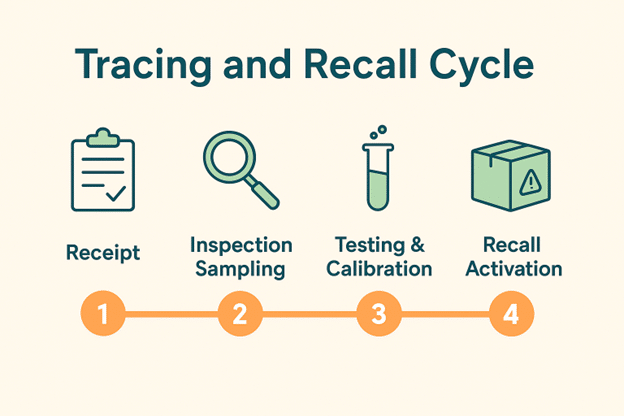
3. Traceability That Is Too Slow
Many companies believe they have traceability—until they run a mock recall.
Then reality appears.
They start pulling receiving logs.
Then production sheets.
Then packaging records.
Then shipping documents.
Four hours later, they are still building the traceability report.
Modern Food traceability software can perform the same task in minutes because data is already connected.
And regulators increasingly expect traceability to be fast.
Not tomorrow.
Not in four hours.
Now.
4. No Operational Visibility
Executives often ask QA managers a simple question:
“Are we in good shape today?”
In paper systems, the honest answer is often:
“I’ll know after I review the paperwork.”
In digital systems, the answer can be:
“Yes. All CCPs completed. No open deviations. All sanitation verified. Traceability ready.”
That is the difference between documentation and operational control.
What Digital Food Safety Actually Means
Digital food safety does not mean replacing paper with a tablet.
It means transforming how food safety is managed operationally.
It means:
-
Monitoring happens in real time
-
Deviations trigger alerts immediately
-
Corrective actions are tracked and closed
-
Traceability is instant
-
Records are automatically stored
-
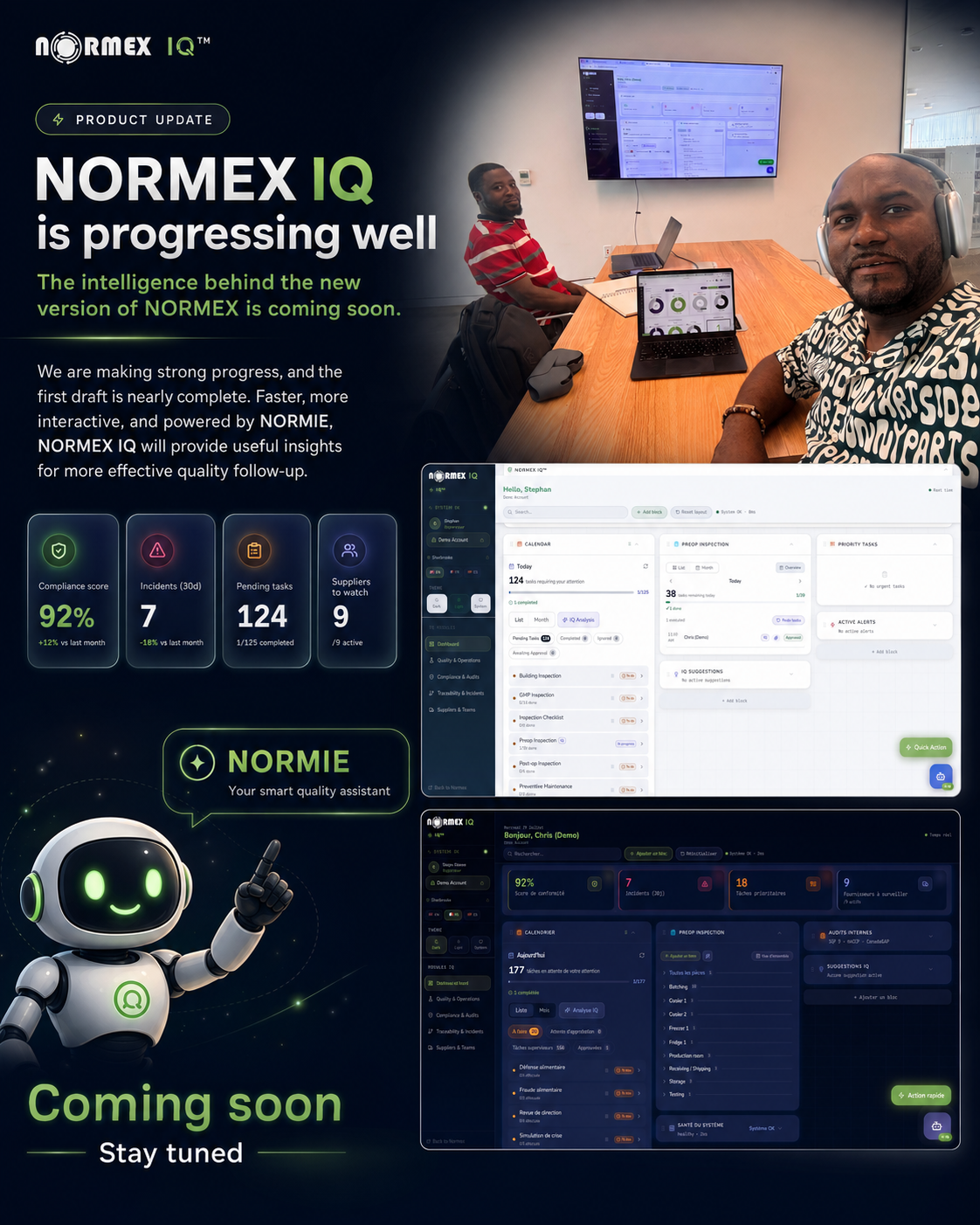
Managers see dashboards of what is happening now
-
Executives see trends and risks across the operation
Digital food safety connects the entire system into one operational platform.
A Step-by-Step Approach to Going Digital
Companies do not need to digitize everything at once.
The most successful companies start with the highest-risk areas.
Step 1: Digitize CCP Monitoring
Critical Control Points are the most important controls in any HACCP plan.
Digitizing CCPs ensures:
-
checks are not missed
-
entries are timestamped
-
deviations trigger alerts
-
corrective actions are documented
This single step dramatically reduces risk.
Step 2: Digitize Traceability
Traceability is one of the biggest weaknesses in paper systems.
Digital traceability connects:
-
receiving
-
production
-
packaging
-
shipping
So when a lot number is entered, the system automatically links everything.
This makes mock recalls and real recalls much faster and more accurate.
Step 3: Digitize Sanitation and Pre-Op Inspections
Sanitation is often documented on paper checklists that are reviewed later.
Digital checklists ensure:
-
tasks are completed
-
tasks are not skipped
-
issues are recorded with photos
-
corrective actions are assigned
This improves both food safety and audit readiness.
Step 4: Create Dashboards
Dashboards allow QA managers and executives to see:
-
open deviations
-
missed checks
-
corrective action status
-
traceability readiness
-
audit readiness
-
food safety KPIs
Instead of reviewing paperwork, teams manage performance.
Step 5: Use Data to Improve Operations
Once data is digital, companies can analyze trends such as:
-
which lines have the most deviations
-
which products have the most issues
-
which shifts miss the most checks
-
which suppliers create the most problems
This turns food safety from a compliance activity into a continuous improvement system.
A Real-World Scenario
Consider a company producing ready-to-eat products.
They had:
-
HACCP plan
-
SOPs
-
Paper logs
-
Traceability records
-
Corrective action forms
They passed audits.
But they struggled operationally.
Traceability took 6 hours.
Deviations were found late.
Corrective actions stayed open.
QA spent most of the day reviewing paperwork.
After implementing digital food safety software, the changes were significant:
-
Traceability time dropped from 6 hours to 20 minutes
-
Missed checks decreased dramatically
-
Corrective actions were tracked and closed faster
-
QA spent more time improving processes instead of reviewing logs
-
Audit preparation time dropped by more than 50%
The system did not just become digital.
It became manageable.
The Executive Perspective
For leadership teams, the question is no longer:
“Should we go digital?”
The real question is:
“How long can we afford not to?”
Because the cost of staying paper-based includes:
-
higher recall risk
-
slower traceability
-
more audit findings
-
more manual labor
-
less visibility
-
more operational risk
-
difficulty scaling operations
Digital food safety is not just a quality decision.
It is a business decision.
It affects risk, efficiency, scalability, and customer confidence.
The Industry Is Moving
Across the food industry, the direction is clear.
Companies are investing in:
-
automation
-
IoT sensors
-
real-time monitoring
-
digital traceability
-
integrated systems
-
data analytics
Food safety is becoming digital because food production is becoming digital.
And companies that do not modernize their food safety systems will eventually face:
-
operational inefficiencies
-
customer pressure
-
regulatory pressure
-
scaling limitations
The Bottom Line
Digital food safety is no longer a “nice to have.”
It is no longer an innovation project.
It is no longer an IT project.
It is operational infrastructure.
Just like ERP systems.
Just like production systems.
Just like inventory systems.
Food safety systems must now operate at the same speed as production.
Because food safety problems happen in real time—not on paper.
See What Digital Food Safety Looks Like
If you want to see how a digital system can manage monitoring, traceability, corrective actions, and food safety KPIs in real time, you can book a demo here:
Because the companies that will lead the food industry tomorrow are not the ones with the most paperwork.
They are the ones with the most control.