
Why Real-Time Data Beats Perfect Documentation
Walk into a food production facility during an audit and you will often see something impressive.
Binders neatly organized.
Procedures printed and signed.
Logs filled with initials and timestamps.
Records archived for months—or even years.
From the outside, everything looks perfect.
Every form is completed.
Every SOP appears followed.
Every monitoring sheet is signed.
Yet seasoned auditors and experienced food safety professionals know something important:
Perfect documentation does not always mean perfect control.
In fact, some of the most beautifully organized documentation systems hide the greatest operational risks.
Because documentation tells you what was recorded.
Real-time data tells you what is actually happening.
And in modern food production, that difference can determine whether a system truly protects consumers—or simply protects the paperwork.
The Documentation Trap
Documentation has always been central to Food safety systems.
Regulatory frameworks such as HACCP, FSMA, SQF, BRCGS, and FSSC 22000 all require documented evidence that controls are in place.
And for good reason.
Documentation provides proof that:
-
monitoring occurred
-
limits were respected
-
corrective actions were taken
-
procedures were followed
Without records, companies cannot demonstrate control.
But over time, many organizations shifted their focus.
Instead of asking:
“Are controls happening?”
They started asking:
“Are the forms filled?”
That subtle change created a dangerous illusion.
Because forms can be filled after the fact.
But food safety failures happen in real time.
The Reality of Paper-Based Systems
In many food facilities, monitoring still relies heavily on paper.
Operators fill out logs during shifts.
Supervisors review them later.
Quality teams verify them at the end of the day.
On the surface, this system appears compliant.
But in practice, several problems emerge.
1. Delayed Visibility
With paper records, deviations often remain invisible for hours.
Imagine a CCP temperature check recorded incorrectly.
If the QA manager reviews the sheet four hours later, the product has already moved through packaging and distribution.
The opportunity to act early is gone.
Real-time visibility changes this completely.
When monitoring is digital, deviations trigger alerts immediately.
Corrective actions can start before the issue spreads.
2. Backfilled Records
Paper systems allow something that digital systems cannot easily prevent:
backfilling.
An operator who forgets to record a check may complete the form later.
The result?
The documentation looks perfect.
But the control never actually happened at the required time.
Real-time data prevents this because timestamps cannot easily be altered.
The system records when the action actually occurs.
3. Missing Trends
Paper logs rarely reveal patterns.
A temperature deviation here.
A sanitation delay there.
Individually, each issue looks small.
But collectively, they may signal a systemic problem.
Digital systems allow organizations to analyze trends:
-
recurring deviations
-
frequent late checks
-
repeated corrective actions
This is where food safety software becomes powerful.
It transforms monitoring data into operational intelligence.
A Simple Example
Consider a bakery producing thousands of units per hour.
Their metal detector must be verified every hour.
In a paper system, operators record the verification manually.
If the check is missed at 10:00 a.m. and recorded later at noon, the documentation still appears correct.
But two hours of production ran without verification.
With real-time monitoring, the system immediately flags the missed check.
Supervisors receive alerts.
Production can pause until verification occurs.
That difference—two hours versus two minutes—can prevent massive recalls.
Real-Time Data Changes the Game
Real-time data fundamentally transforms how food safety systems operate.
Instead of relying on retrospective documentation, organizations gain live operational awareness.
Let’s explore what that means.
Immediate Deviation Detection
When monitoring happens digitally, deviations appear instantly.
Examples include:
-
temperature limits exceeded
-
CCP checks missed
-
sanitation tasks delayed
-
allergen changeover incomplete
Alerts can notify supervisors immediately.
This allows corrective action to begin before product safety is compromised.
Operational Transparency
Real-time dashboards allow managers to see the health of operations at a glance.
For example, they can see:
-
which lines completed checks
-
which controls are overdue
-
which tasks remain open
-
which deviations require attention
Instead of reviewing yesterday’s paperwork, teams manage today’s risks.
Stronger Traceability
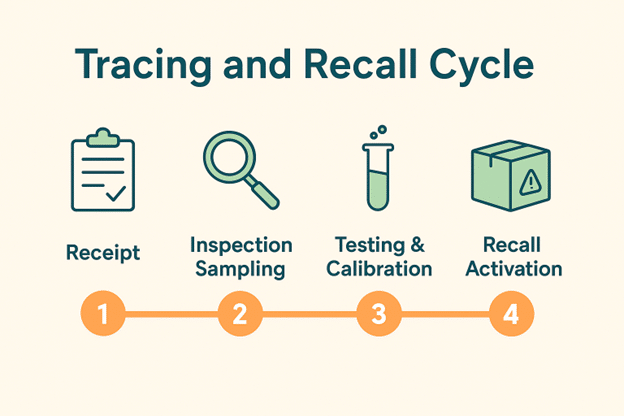
Traceability becomes faster and more accurate when data is captured in real time.
With Food traceability software, companies can instantly identify:
-
incoming ingredient lots
-
production batches
-
affected finished goods
-
distribution destinations
During recalls or mock recall exercises, response time can drop from hours to minutes.
And regulators increasingly expect this level of responsiveness.
What Regulators Actually Want
Many organizations assume regulators care most about documentation.
But that assumption is outdated.
Regulators care about control.
Documentation simply proves that control exists.
In fact, many modern regulatory frameworks emphasize:
-
preventive controls
-
verification effectiveness
-
traceability speed
-
deviation management
These goals are far easier to achieve with real-time systems.
Paper systems were designed for recordkeeping.
Modern food safety demands operational intelligence.
A Step-by-Step Approach to Real-Time Food Safety
Transitioning to real-time systems does not require rebuilding everything overnight.
A structured approach makes adoption manageable.
Step 1: Identify High-Risk Controls
Start with controls where delayed detection creates the greatest risk.
Examples include:
-
CCP monitoring
-
allergen changeovers
-
sanitation verification
-
temperature monitoring
-
label verification
These controls benefit most from real-time visibility.
Step 2: Replace Paper Logs with Digital Monitoring
Digital monitoring ensures:
-
timestamped records
-
required fields
-
automatic alerts
-
centralized data storage
Operators still perform the same tasks—but the system records them reliably.
This reduces errors and increases transparency.
Step 3: Create Operational Dashboards
Dashboards allow QA managers and executives to see the current status of food safety controls.
Key information may include:
-
monitoring completion rates
-
open deviations
-
corrective action status
-
traceability readiness
This visibility transforms food safety from a reactive activity into a proactive one.
Step 4: Automate Alerts
Alerts are one of the most powerful benefits of digital monitoring.
When deviations occur, the system can automatically notify:
-
line supervisors
-
quality managers
-
plant leadership
Instead of discovering problems later, teams respond immediately.
Step 5: Analyze Trends
Over time, monitoring data becomes a strategic resource.
Organizations can analyze patterns such as:
-
frequent equipment deviations
-
recurring operator errors
-
sanitation inefficiencies
-
traceability gaps
These insights allow companies to improve processes continuously.
A Real-World Scenario
Consider a mid-sized food manufacturer with multiple production lines.
Before implementing real-time monitoring, their system relied heavily on paper.
Quality managers spent hours reviewing logs each day.
Despite this effort, they faced recurring audit findings:
-
late monitoring records
-
incomplete corrective actions
-
slow traceability response
After implementing digital monitoring and food safety software, several improvements occurred.
Monitoring completion increased dramatically.
Deviations were identified instantly.
Traceability drills that once took four hours could now be completed in less than fifteen minutes.
Most importantly, QA teams shifted their focus from reviewing paperwork to preventing risks.
The Executive Perspective
For executives and plant leaders, the shift toward real-time food safety systems offers several advantages.
Reduced Risk
Early detection prevents small deviations from escalating into recalls or regulatory actions.
Stronger Compliance
Digital systems automatically enforce monitoring requirements and documentation accuracy.
Improved Efficiency
Quality teams spend less time reviewing paperwork and more time improving operations.
Data-Driven Decisions
Leadership gains access to real operational insights instead of historical records.
The Future of Food Safety
The food industry is undergoing rapid transformation.
Production volumes are increasing.
Supply chains are more complex.
Regulatory expectations are rising.
Paper-based monitoring systems simply cannot keep pace with these demands.
The future of food safety belongs to organizations that leverage real-time visibility, integrated traceability, and digital monitoring.
Documentation will always remain important.
But the organizations that lead the industry understand a critical truth:
Documentation proves control.
Real-time data creates it.
See Real-Time Food Safety in Action
If you want to see how modern food safety software can transform monitoring, traceability, and operational visibility, schedule a demo here:
Bring your most complex monitoring process.
Because the goal is not just better documentation.
It is real-time control of food safety.