Temporary Staff, Permanent Consequences
Peak production season has arrived.
Orders are increasing.
Production schedules are full.
Overtime is becoming the norm.
To keep up with demand, many food manufacturers do what they have always done:
They hire temporary staff.
It makes perfect business sense.
Temporary employees provide flexibility, help meet customer demand, and reduce the pressure on permanent teams.
But they also introduce one of the most overlooked food safety risks in manufacturing.
Not because temporary workers care less.
Not because they are less capable.
But because they are unfamiliar with your people, your processes, your equipment, your products, and your food safety culture.
And that unfamiliarity can have permanent consequences.
A missed allergen verification.
An incorrectly completed CCP check.
A sanitation shortcut.
An undocumented deviation.
A labeling mistake.
The incident may last only a few minutes.
The consequences may last for years.
That's why the best food manufacturers don't treat temporary employees as temporary risks.
They integrate them into the food safety system from the very first day.
The Real Challenge Isn't Hiring Temporary Staff
Hiring temporary workers is not the problem.
Failing to prepare them is.
Every new employee enters your facility without knowing:
-
your food safety culture,
-
your operational expectations,
-
your critical control points,
-
your sanitation standards,
-
your traceability procedures,
-
your escalation process.
If those gaps are not addressed immediately, the company begins relying on assumptions instead of competence.
And assumptions are dangerous in food manufacturing.
Why Temporary Workers Increase Food Safety Risk
1. They Are Learning While Production Continues
Unlike classroom environments, food plants never stop.
New employees often learn:
-
beside experienced operators,
-
during live production,
-
under production pressure.
There is little room for mistakes.
Yet mistakes are exactly what inexperienced employees are most likely to make.
Without structured onboarding, they often imitate what they observe rather than what procedures actually require.
2. They May Not Understand Why Controls Exist
Most temporary employees can be shown how to perform a task.
Far fewer understand why that task matters.
For example:
A new employee may know they must verify a label.
But do they understand that one incorrect allergen declaration could trigger:
-
a nationwide recall,
-
serious consumer illness,
-
legal action,
-
permanent brand damage?
Understanding purpose changes behavior.
3. They're Often Assigned to High-Pressure Areas
Temporary employees frequently support:
-
packaging,
-
sanitation,
-
warehouse operations,
-
production lines.
Ironically, these are also areas where execution mistakes have significant food safety implications.
Examples include:
-
incorrect labels,
-
poor lot identification,
-
improper cleaning,
-
damaged packaging,
-
cross-contamination.
Without supervision and competency verification, risk increases rapidly.
4. High Turnover Creates Constant Variability
Many companies onboard temporary employees every few weeks.
That means the organization is constantly introducing people who are unfamiliar with the operation.
Each new employee increases operational variability.
Unless the onboarding system itself is highly standardized.
The Hidden Cost of Weak Onboarding
Many organizations measure onboarding by asking:
"Did they receive training?"
The better question is:
"Can they safely perform the job without supervision?"
There is a major difference.
Attendance does not equal competency.
Signing a training sheet does not guarantee understanding.
Food safety depends on demonstrated competence—not documented attendance.
Where Things Usually Go Wrong
Incomplete Orientation
Employees begin working before completing:
-
GMP training,
-
allergen awareness,
-
hygiene expectations,
-
reporting procedures.
Role Confusion
Temporary staff often don't know:
-
who to ask,
-
who approves holds,
-
who receives deviation reports,
-
when production should stop.
Uncertainty delays response.
Weak Documentation
Training records become incomplete.
Refresher training is forgotten.
Competency evaluations are inconsistent.
During audits, this becomes immediately visible.
Inconsistent Supervision
Experienced operators become busy.
Temporary workers receive less coaching.
Shortcuts appear.
Incorrect habits develop.
Those habits often persist long after onboarding ends.
Why Auditors Pay Attention
Auditors understand that temporary employees create additional risk.
That's why they often ask:
-
How are temporary employees trained?
-
How do you verify competency?
-
Are temporary workers included in food safety training?
-
Can they explain their responsibilities?
-
Who supervises them?
The answers reveal whether the organization treats onboarding as paperwork—or as risk management.
What Top-Performing Food Plants Do Differently
The strongest organizations don't lower expectations for temporary employees.
They strengthen systems around them.
1. Standardized Onboarding
Every employee—temporary or permanent—receives:
-
GMP training,
-
food safety orientation,
-
allergen awareness,
-
traceability basics,
-
emergency procedures,
-
reporting expectations.
The process is identical every time.
Consistency reduces variability.
2. Competency Before Independence
Top plants never assume training equals competence.
New employees demonstrate they can perform tasks correctly before working independently.
Observation matters.
Practical verification matters.
Confidence alone is not enough.
3. Visual Procedures
Complex manuals are replaced with:
-
visual work instructions,
-
photographs,
-
simplified checklists,
-
workstation guides.
This helps employees perform correctly under production pressure.
4. Real-Time Operational Support
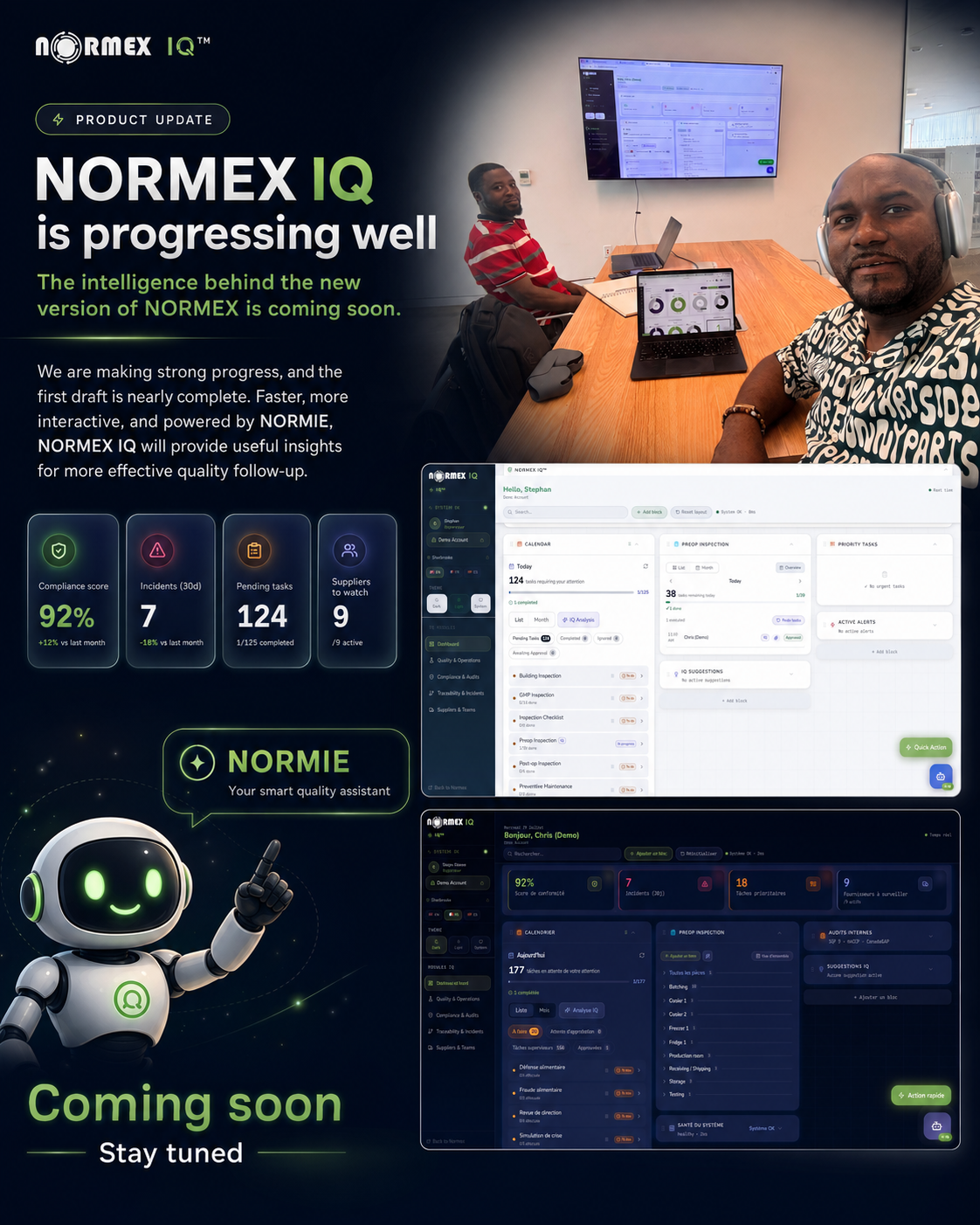
Modern food safety software helps supervisors know:
-
who completed training,
-
which qualifications are expiring,
-
which employees are authorized for specific tasks,
-
where competency gaps exist.
This eliminates guesswork.
5. Structured Mentorship
Top-performing facilities pair temporary workers with experienced mentors during their first shifts.
Questions get answered immediately.
Incorrect habits are corrected early.
Confidence grows faster.
A Real-World Scenario
A bakery hired more than 60 temporary employees during its busiest production season.
Initially, onboarding consisted of:
-
a short orientation,
-
GMP presentation,
-
signing attendance sheets.
Within weeks:
-
labeling errors increased,
-
sanitation deviations rose,
-
traceability records became inconsistent.
The company redesigned its onboarding process.
They introduced:
-
role-specific training,
-
competency verification,
-
visual workstation instructions,
-
supervisor coaching,
-
digital training tracking through food safety software.
Within two months:
-
deviations dropped significantly,
-
onboarding time decreased,
-
employee confidence improved,
-
audit readiness strengthened.
The difference wasn't better employees.
It was a better system.
Step-by-Step: Reducing Temporary Staff Risk
Step 1 — Build Role-Based Training
Train employees based on the actual tasks they perform.
Packaging operators require different competencies than sanitation teams.
Step 2 — Verify Competency
Observe employees performing:
-
CCP monitoring,
-
label verification,
-
sanitation,
-
traceability tasks.
Competency should be demonstrated—not assumed.
Step 3 — Simplify Work Instructions
Use:
-
photographs,
-
diagrams,
-
workstation guides,
-
visual reminders.
Reduce ambiguity.
Step 4 — Digitize Training Records
Digital food safety software allows organizations to:
-
assign training,
-
track completion,
-
automate refresher reminders,
-
verify qualifications,
-
retrieve records instantly during audits.
Step 5 — Monitor New Employees Closely
Review:
-
deviations,
-
observations,
-
coaching notes,
-
performance trends.
Early support prevents long-term habits.
Step 6 — Reinforce Food Safety Daily
Use:
-
shift meetings,
-
toolbox talks,
-
visual reminders,
-
coaching conversations.
Food safety culture develops through repetition—not one-time orientation.
The Executive Perspective
Temporary labor is often viewed as a staffing solution.
In reality, it is also a food safety strategy.
Because every new employee changes the operational risk profile.
Companies that invest in structured onboarding experience:
-
fewer deviations,
-
stronger consistency,
-
better audit outcomes,
-
improved operational stability.
Training is not an administrative expense.
It is risk prevention.
The Bottom Line
Temporary employees may only stay for a few weeks or months.
But one mistake can affect your company for years.
That's why onboarding should never be rushed.
Competency should never be assumed.
And food safety expectations should never change based on employment status.
Because pathogens, allergens, and recalls don't distinguish between temporary and permanent employees.
Neither should your food safety system.
Final Thought
Ask yourself one question:
If your newest temporary employee started on the production floor today, would you trust them with your most critical food safety control?
If the answer is uncertain, your onboarding system—not your employee—is the opportunity for improvement.
See How Modern Training Management Strengthens Food Safety
If you want to see how integrated Food safety systems can automate onboarding, manage competency, track qualifications, and simplify training records, book a live demo here:
Because temporary employees should never create permanent food safety risks.