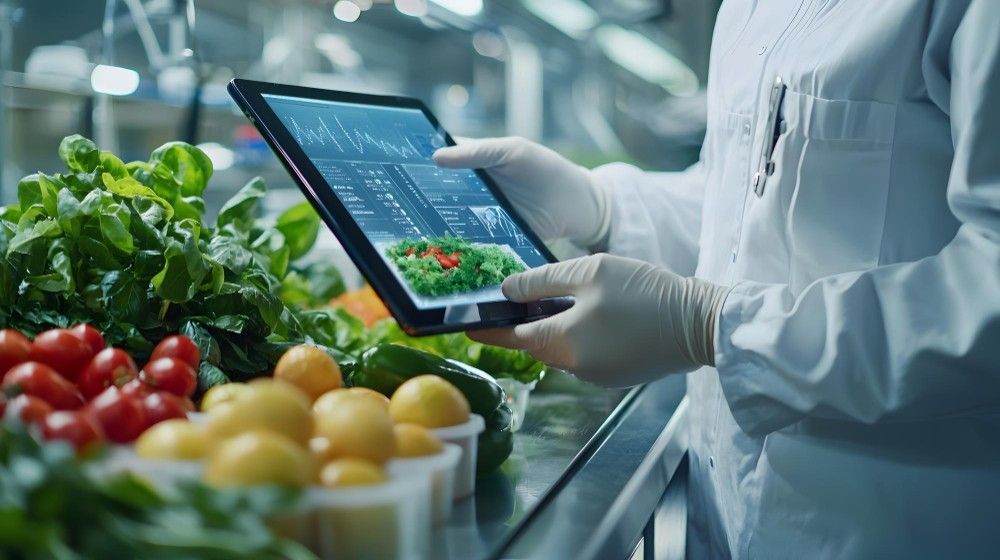
Why Your Next Food Safety Hire Should Be More Digital
For decades, the ideal food safety professional had a familiar set of skills.
They understood HACCP.
They knew GMPs.
They could interpret regulations.
They knew how to prepare for audits, investigate deviations, manage corrective actions, review records, and keep documentation organized.
Those skills still matter.
But they are no longer enough.
The food industry is becoming more complex, more connected, and far more data-driven.
Production systems generate more information.
Customers expect faster answers.
Traceability expectations are increasing.
Auditors want stronger evidence.
Management wants real-time visibility.
Automation is becoming normal.
And artificial intelligence is beginning to change how information is analyzed and how decisions are supported.
Yet many companies are still hiring food safety professionals primarily for their ability to manage documentation.
That needs to change.
Your next food safety hire should certainly understand food safety.
But they should also be comfortable with data, digital workflows, dashboards, automation, and emerging technology.
Not because every QA manager needs to become an IT specialist.
But because the next generation of food safety leadership will spend less time managing paperwork and more time managing information.
And that requires a different skill set.
The Food Safety Role Is Changing
Think about what a traditional QA manager's day can look like.
Review yesterday's production records.
Check missing signatures.
Update a spreadsheet.
Email someone about an overdue corrective action.
Look for a supplier certificate.
Prepare training records.
Enter information into another spreadsheet.
Print documents for an audit.
File completed forms.
Follow up again on the corrective action.
By the end of the day, the QA manager has been extremely busy.
But how much time was actually spent improving food safety?
That is the problem.
Highly trained professionals are often being used as information administrators.
The future of food safety looks different.
Digital systems can increasingly handle:
-
record collection,
-
reminders,
-
document organization,
-
task assignment,
-
trend calculations,
-
training notifications,
-
traceability connections,
-
routine reporting.
That changes the role of the food safety professional.
The value moves from collecting information to understanding and acting on information.
The Next QA Manager Needs to Ask Different Questions
The traditional question might be:
"Are all the forms completed?"
The digital food safety professional asks:
"What is the data telling us?"
Instead of simply confirming that 500 sanitation inspections were completed, they ask:
-
Which areas fail most frequently?
-
Are failures increasing?
-
Does one shift experience more problems?
-
Does the issue occur after certain products?
-
Are corrective actions actually reducing recurrence?
Instead of confirming that training records exist, they ask:
-
Which departments have the largest competency gaps?
-
Are deviations associated with recently trained employees?
-
Which training programs appear ineffective?
Instead of simply completing a mock recall, they ask:
-
How fast was the traceability exercise?
-
Where did information retrieval slow down?
-
Which data points required manual intervention?
-
How can the process be automated?
That is a very different mindset.
Digital Does Not Mean "Good With Computers"
This distinction matters.
When we say a food safety professional should be more digital, we are not saying they need to know programming.
You don't need your next QA manager writing software code.
You need someone who understands how technology can improve processes.
They should be comfortable asking:
"Why are we doing this manually?"
"Can this information be captured automatically?"
"Can these systems communicate?"
"Can we create an alert instead of relying on memory?"
"Can this dashboard reveal a trend before it becomes a problem?"
That mindset is more important than technical expertise.
Skill 1: Data Literacy
Food companies generate enormous amounts of information.
Temperatures.
Sanitation results.
Environmental monitoring.
Supplier performance.
Complaints.
Deviations.
Corrective actions.
Training.
Audits.
Traceability.
Production information.
Historically, much of this information has been collected primarily as evidence of compliance.
The next generation of food safety professionals will use it differently.
They will use data to make decisions.
For example, imagine a facility records 42 sanitation deviations over six months.
A traditional review may conclude:
42 deviations occurred and all were corrected.
A data-driven professional asks:
-
Where did they occur?
-
When?
-
Which equipment was involved?
-
Which shift?
-
What products were produced beforehand?
-
Were the same root causes identified repeatedly?
Suddenly, 42 individual records become an operational story.
That story may reveal a weakness nobody could see by reviewing forms individually.
Skill 2: Dashboard Thinking
Strong food safety professionals increasingly need to understand what should be visible.
A useful dashboard does not simply display numbers.
It answers operational questions.
Leadership should be able to see:
-
overdue corrective actions,
-
recurring deviations,
-
incomplete monitoring,
-
training compliance,
-
supplier performance,
-
sanitation trends,
-
traceability readiness.
A digitally capable QA manager knows which indicators matter and which do not.
That is important because digital transformation can create another problem:
Too much data.
Collecting everything without knowing what matters simply replaces paper overload with digital overload.
The skill is not collecting more information.
The skill is identifying the information that drives better decisions.
Skill 3: Understanding Automation
Many food safety activities are still dependent on memory.
Someone must remember to:
-
review a record,
-
renew a supplier certificate,
-
schedule calibration,
-
complete refresher training,
-
close a corrective action,
-
perform an inspection.
This works until the organization grows.
Then tasks multiply.
People get busy.
Things get missed.
Automation changes that.
Modern food safety software can automatically:
-
assign tasks,
-
issue reminders,
-
escalate overdue actions,
-
schedule recurring activities,
-
notify supervisors,
-
track completion.
Your next food safety leader should understand where automation makes sense.
Not to eliminate people.
To eliminate unnecessary dependence on memory.
Skill 4: Digital Traceability
Traceability is becoming increasingly data-driven.
A modern food safety professional should understand how information flows through:
Receiving → Inventory → Production → Finished Product → Shipping
They should be comfortable working with:
-
lot codes,
-
digital receiving records,
-
production data,
-
inventory systems,
-
shipment records.
Good Food traceability software can connect those pieces.
But the technology only works if the people managing the process understand the information architecture behind it.
If one critical lot number is missing at receiving, everything downstream becomes weaker.
The future QA professional must understand both the food safety requirement and the digital information flow supporting it.
Skill 5: Connecting Systems Instead of Creating More Spreadsheets
Excel remains incredibly useful.
But it has also become the default solution to almost every information problem.
New issue?
Create a spreadsheet.
New KPI?
Create another spreadsheet.
Supplier tracking?
Spreadsheet.
CAPA tracking?
Spreadsheet.
Training?
Spreadsheet.
Eventually, the QA manager becomes responsible for maintaining dozens of disconnected information sources.
A digitally minded professional asks a better question:
"Can this information be connected to what we already have?"
The future is not about creating more digital files.
It is about creating connected workflows.
Skill 6: Using Artificial Intelligence Responsibly
AI will increasingly become part of food safety work.
Not as a replacement for qualified professionals.
As an accelerator.
AI can potentially assist professionals with activities such as:
-
reviewing large volumes of information,
-
identifying trends,
-
summarizing records,
-
drafting procedures,
-
supporting root cause investigations,
-
identifying potential hazards,
-
preparing training materials,
-
organizing audit information.
But AI also creates new responsibilities.
Food safety professionals must understand that an AI-generated answer is not automatically correct.
They still need to:
-
verify information,
-
apply regulatory knowledge,
-
understand operational context,
-
challenge recommendations,
-
protect confidential information,
-
maintain human accountability.
The strongest professionals will not blindly trust AI.
They will know how to use it intelligently.
Skill 7: Digital Problem Solving
Perhaps the most important skill is curiosity.
When a process is inefficient, the digitally minded employee asks why.
Why are operators entering the same information twice?
Why does QA manually email reminders?
Why does a mock recall require five people?
Why does audit preparation take three weeks?
Why do managers only see food safety KPIs at month-end?
Those questions create improvement.
Digital transformation often begins with someone refusing to accept unnecessary inefficiency as normal.
The Risk of Hiring Only for Traditional Experience
Imagine two candidates for a QA manager position.
Candidate A has excellent food safety experience.
They know HACCP, audits, documentation, and regulatory requirements extremely well.
Candidate B has the same core food safety knowledge but is also comfortable with:
-
dashboards,
-
digital workflows,
-
data analysis,
-
automation,
-
connected systems,
-
AI-assisted tools.
Both candidates can manage today's food safety system.
But which one is more prepared to build tomorrow's?
That should increasingly influence hiring decisions.
A Real-World Scenario
Consider a growing manufacturer with several hundred food safety records generated every day.
The QA department is overwhelmed.
Management assumes they need another administrative employee.
Instead, they hire a QA professional with strong digital skills.
The new employee starts asking questions.
Why are temperature records manually reviewed every morning?
Why are CAPA reminders sent by email?
Why is supplier approval managed in three spreadsheets?
Why does training status require manual reconciliation?
Why does traceability require pulling information from several departments?
Over time, workflows are redesigned.
Digital forms replace repetitive entry.
Alerts replace manual reminders.
Dashboards replace weekly spreadsheet compilation.
Traceability data becomes connected.
The result is not simply less paperwork.
QA gains time.
And that time is redirected toward:
-
preventive activities,
-
root cause analysis,
-
employee coaching,
-
internal audits,
-
process improvement.
The company did not simply hire another QA professional.
It increased the capability of the entire food safety system.
What to Look for in Your Next Food Safety Hire
Technical food safety knowledge remains non-negotiable.
But consider adding digital competencies to your hiring criteria.
Look for someone who:
-
understands food safety fundamentals,
-
is comfortable analyzing data,
-
learns new technology quickly,
-
understands digital workflows,
-
thinks in terms of systems,
-
looks for opportunities to automate,
-
understands basic dashboard concepts,
-
values data integrity,
-
is curious about AI,
-
questions inefficient manual processes.
You don't need every candidate to have experience with your exact technology.
Technology changes.
The ability to learn does not.
Questions to Ask During the Interview
Instead of only asking technical questions, try scenarios.
Ask:
"You discover that QA spends two hours every morning reviewing yesterday's records. What would you do?"
Or:
"Our mock recall takes three hours because information is stored across several departments. How would you approach improving it?"
Or:
"You have five years of corrective action data. How would you use that information to reduce future deviations?"
Or:
"Where do you think AI could help a food safety department, and where would you not trust it?"
The answers will tell you much more about the candidate's digital mindset than asking whether they know Excel.
Do Not Forget Your Existing Team
This is not only a hiring issue.
Your strongest future digital food safety leader may already work for you.
Many experienced QA professionals have extraordinary:
-
regulatory knowledge,
-
product knowledge,
-
operational experience,
-
problem-solving ability.
What they may lack is exposure to newer digital tools.
That can be taught.
Companies should invest in helping existing teams develop:
-
data literacy,
-
dashboard skills,
-
automation awareness,
-
digital traceability knowledge,
-
responsible AI usage.
Digital transformation should strengthen experienced professionals, not leave them behind.
The Executive Perspective
For executives, this shift matters because labor is one of the most valuable resources in the organization.
Ask yourself:
What are we paying highly qualified food safety professionals to do?
If the answer includes large amounts of:
-
filing,
-
copying,
-
searching,
-
manually compiling reports,
-
sending reminders,
-
maintaining spreadsheets,
then valuable expertise is being underused.
Technology should handle more administrative work.
People should handle more judgment.
That is where the greatest value exists.
The Future QA Department Will Look Different
The QA department of tomorrow will not necessarily have fewer people.
But those people will spend their time differently.
Less:
-
searching for records,
-
entering duplicate data,
-
preparing audit binders,
-
chasing signatures,
-
manually creating reports.
More:
-
analyzing trends,
-
preventing deviations,
-
improving processes,
-
coaching employees,
-
evaluating risks,
-
supporting operations,
-
advising leadership.
That is a much stronger use of food safety expertise.
The Bottom Line
Your next food safety hire still needs to understand HACCP.
They still need regulatory knowledge.
They still need to understand audits, sanitation, preventive controls, allergens, traceability, and corrective actions.
But increasingly, they also need another capability:
Digital thinking.
Because the food industry is generating more information than ever before.
The competitive advantage will not belong to the companies that collect the most data.
It will belong to the companies whose people know what to do with it.
Final Thought
When interviewing your next QA manager, don't only ask:
"Can this person manage our current food safety system?"
Ask:
"Can this person help us build the food safety system we will need five years from now?"
Those are two very different questions.
The strongest candidates will understand food safety deeply.
But they will also understand that tomorrow's food safety professional will work alongside automation, connected data, digital traceability, and artificial intelligence.
The future of food safety will still require human expertise.
It will simply give that expertise better tools.
See What a More Digital Food Safety Operation Looks Like
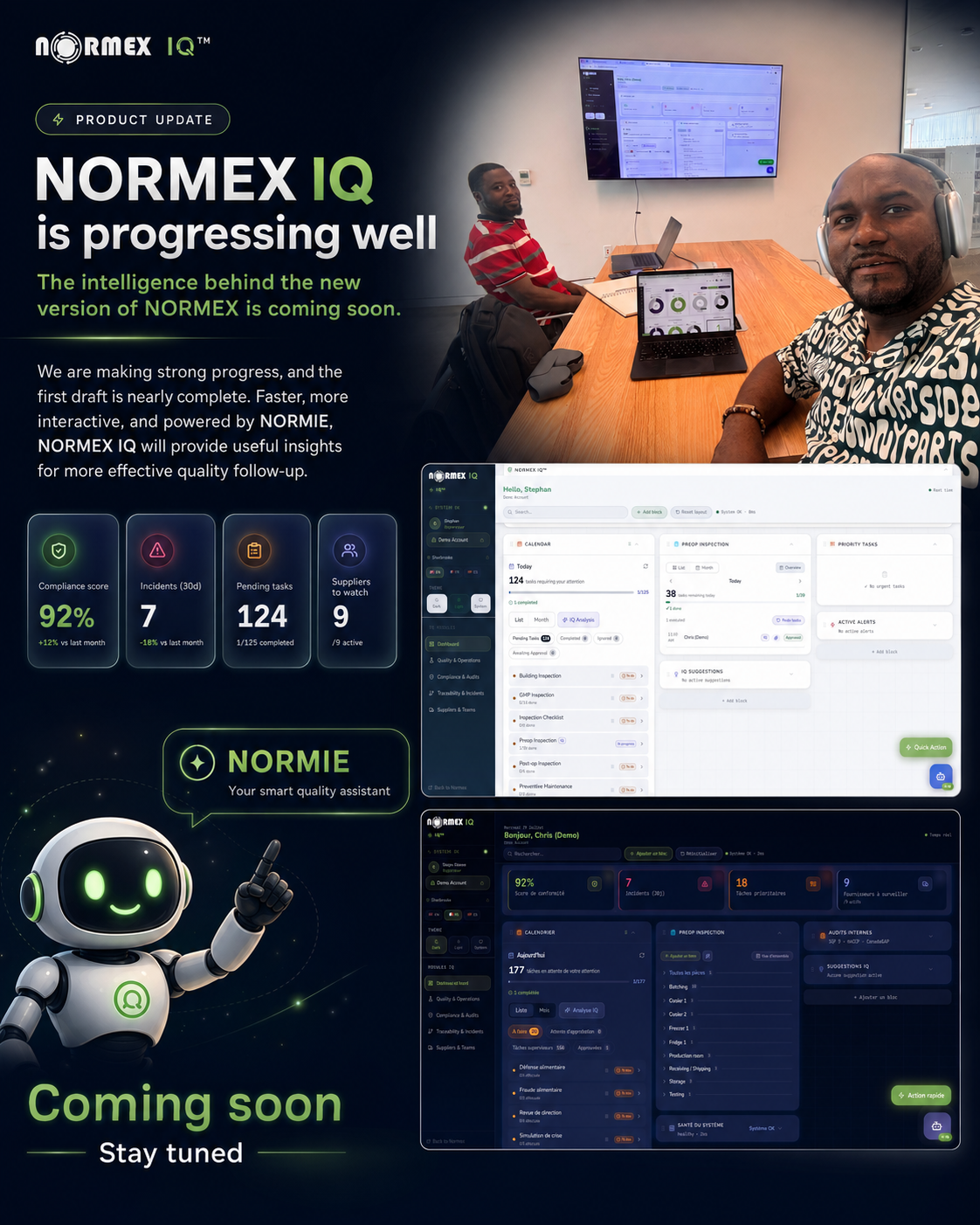
Modern Food safety technology can help teams move away from fragmented records and repetitive administration toward connected workflows, real-time visibility, stronger traceability, and more proactive decision-making.
If you would like to see what that looks like in practice, book a NORMEX demo:
Because the goal of digital transformation is not to replace your food safety team.
It is to give your best people more time to do the work that actually requires their expertise.