
Food Safety KPIs That Actually Matter
The meeting starts the same way it always does.
A dashboard on the screen. A few neat charts. A couple of percentages. A score that looks reassuring. Heads nod. Someone says, “Good job team,” because everything is green.
Then someone asks a question that instantly changes the mood:
“If we had a traceability request right now—could we produce one-step back, one-step forward, and the control records in under an hour?”
Silence.
Not because the team is incompetent. Not because they don’t care about Food safety. But because most KPI dashboards measure what’s easy to count—not what actually predicts risk.
That’s the trap.
Food safety KPIs are supposed to do one thing:
Reduce the probability and impact of a food safety event.
If your KPIs don’t predict problems early, they’re not KPIs—they’re decorations.
This article is about the KPIs that actually matter: the ones that tell you whether your system is strong or fragile, whether your controls are working or drifting, and whether leadership should sleep well—or take action.
Why Most Food Safety Dashboards Don’t Protect You
Many organizations track the same standard list:
-
Audit score
-
Number of customer complaints
-
Number of non-conformities
-
Training hours completed
-
“% of records completed”
-
Days since last incident
None of these are useless. But most are lagging indicators.
They tell you what already happened.
A high audit score can coexist with poor day-to-day discipline. A low complaint rate can hide near misses. Training hours can increase while behaviors stay unchanged. “Records completed” can be backfilled.
So the real question becomes:
What KPIs tell you if control is real—before an auditor, regulator, or customer forces you to prove it?
That’s where leading indicators come in.
The Difference Between “Compliance Metrics” and “Control Metrics”
Here’s a quick way to separate the noise from the signal:
Compliance Metrics (often misleading)
-
Audit score
-
Count of completed forms
-
Training hours
-
Number of internal audits conducted
These measure activity.
Control Metrics (actually predictive)
-
On-time control execution
-
Repeat deviations
-
Corrective action cycle time
-
Traceability response speed
-
Hold and release accuracy
-
Verification effectiveness
These measure system strength.
Executives should care most about control metrics because they predict brand risk.
QA teams should care because they reveal drift early—before it becomes a firefight.
The Food Safety KPIs That Actually Matter
1) On-Time Preventive Control Execution Rate
What it measures:
Whether your preventive controls (CCPs/CPs, pre-op, allergen checks, label verification, etc.) are being executed when they are supposed to, not “sometime that day.”
Why it matters
Late checks are early warning signs.
If checks are late, they’re often rushed. If they’re rushed, they’re often wrong. If they’re wrong, you don’t have control—you have paperwork.
How to calculate
(On-time checks ÷ Total required checks) × 100
Example
You require:
-
pre-op verification before startup
-
metal detector verification every hour
-
allergen label verification at changeover and hourly
If operators complete 420 checks in a week but 60 are late, your on-time rate is:
(360 ÷ 420) × 100 = 85.7% → That’s drift.
Real target: 98–99%+
Anything below 95% is a leadership issue, not just a QA issue.
2) Deviation Rate Normalized by Production Volume
What it measures:
How often your system goes out of spec relative to output.
Why it matters
Raw deviation counts lie.
If you doubled production and deviations rose from 10 to 15, you might actually be performing better. Normalizing reveals truth.
How to calculate (examples)
-
Deviations per 100 production hours
-
Deviations per 10,000 units
-
Deviations per batch/run
Example
Line A:
-
12 deviations / 1,200 production hours = 1 deviation per 100 hours
Line B:
-
8 deviations / 300 production hours = 2.67 deviations per 100 hours
Line B is the risk line even though it has fewer deviations overall.
Executive takeaway: Normalize metrics or you’ll chase the wrong problem.
3) Repeat Deviation Rate
What it measures:
How often the same issue comes back—meaning corrective actions didn’t actually correct anything.
Why it matters
Repeat deviations are a sign of:
-
shallow root cause analysis
-
weak verification of effectiveness
-
“band-aid fixes” under production pressure
Auditors hate repeat findings. Regulators notice patterns. Customers lose confidence when the same issue reappears.
How to calculate
(Repeat deviations in last 90 days ÷ Total deviations) × 100
Example
If you had 40 deviations in 90 days and 12 were repeats, repeat rate = 30%.
That’s not “bad luck.” That’s system weakness.
Target: <10%
Red flag: >20%
4) Corrective Action Cycle Time (Detection to Verified Closure)
What it measures:
How long it takes to go from deviation detection → corrective action → verification → closure.
Why it matters
Open corrective actions are ongoing exposure.
If the root cause isn’t fixed, the hazard pathway is still open.
How to calculate
Average days to verified closure, by severity:
-
Minor
-
Major
-
Critical
Example
If allergen-related CAPAs average 45 days to close, that’s a serious executive risk—not a QA inconvenience.
Suggested targets
-
Minor: <14 days
-
Major: <30 days
-
Critical: immediate containment + closure ASAP with verification
5) Verification Effectiveness Rate
What it measures:
How often verification activities detect issues early.
Verification includes:
-
record review
-
internal audits
-
calibration checks
-
environmental monitoring
-
sanitation verification (ATP, swabs)
Why it matters
If verification never finds anything, one of two things is true:
-
you’re perfect (rare), or
-
verification is superficial (common)
Verification should catch drift.
Example KPI approach
-
% of verification activities that find at least one actionable issue
-
% of issues resolved within target timeframe
This KPI tells you if your verification program is real or ceremonial.
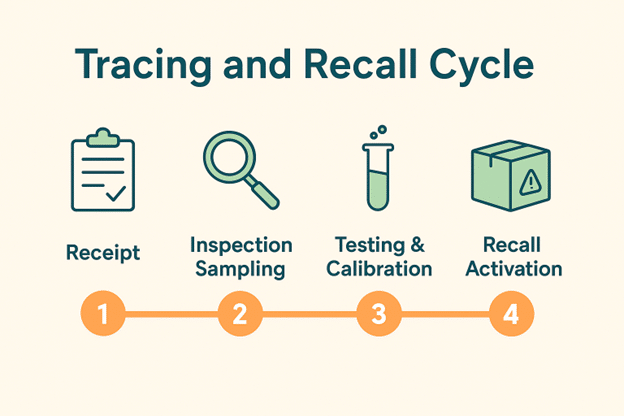
6) Traceability Response Time
What it measures:
How quickly you can produce full traceability evidence:
-
one-step back
-
one-step forward
-
relevant control records
-
relevant sanitation records
-
hold/release status
Why it matters
Traceability speed = containment speed.
Slower traceability:
-
expands recall scope
-
increases customer downtime
-
increases regulatory scrutiny
-
damages credibility
This is where Food traceability software becomes a strategic advantage. It turns traceability from a manual scavenger hunt into a structured query.
Example targets
-
Basic standard: under 2 hours
-
Strong standard: under 30 minutes
-
Best-in-class: under 15 minutes
Run quarterly mock traceability drills and measure time consistently.
7) Hold & Release Accuracy Rate
What it measures:
Whether held product is actually held, and whether release is properly authorized and documented.
Why it matters
Accidental shipment of held product is one of the most expensive failures possible. It can turn a minor deviation into a customer crisis.
How to calculate
(# holds correctly executed and released ÷ Total hold events) × 100
Target: 100%
There is no acceptable failure rate here.
8) “Record Integrity” KPI (Backfilling and Missing Data)
What it measures:
How often records are:
-
missing,
-
completed late,
-
corrected without explanation,
-
or inconsistent.
Why it matters
Paper systems and disconnected spreadsheets create integrity risk. Even honest teams can’t prove integrity without timestamps and audit trails.
This is why many teams adopt food safety software: it forces structured completion, timestamps, role-based accountability, and audit trails.
Example measurement
-
% records completed within required window
-
missing records per week
-
edits/corrections with documented reason
9) Cost of Poor Quality from Food Safety Issues (COPQ)
What it measures:
Financial impact of food safety drift:
-
rework
-
scrap
-
downtime
-
holds
-
resampling/testing
-
expedited shipping
-
customer credits
Why it matters
C-level leaders move fast when you translate risk into money.
If deviations cost $12,000/month in rework and downtime, suddenly the conversation changes.
Food safety stops being “compliance” and becomes operational performance.
Step-by-Step: How to Build a KPI System That Actually Protects You
Step 1 — Decide what you’re trying to predict
Good KPIs predict:
-
drift in controls
-
repeat risk pathways
-
slow response capability
-
weak accountability
-
traceability fragility
If a KPI doesn’t help you predict these, question it.
Step 2 — Choose a tight set of “Executive KPIs”
Executives don’t need 50 metrics. They need 6–10 that drive action.
A strong executive set:
-
On-time control execution
-
Deviation rate normalized
-
Repeat deviation rate
-
CAPA cycle time + overdue CAPAs
-
Traceability response time
-
Hold/release accuracy
-
Verification effectiveness
-
COPQ
Step 3 — Build definitions everyone agrees on
Most KPI programs fail because definitions vary.
Define:
-
what counts as a deviation
-
what counts as “late”
-
what counts as “repeat”
-
what counts as “closed” (hint: closure must include verification)
This removes arguments and builds trust in the numbers.
Step 4 — Fix data collection (this is where the battle is won)
If data is manual, inconsistent, or late, KPI output becomes fiction.
This is the practical reason organizations implement food safety software:
-
structured fields
-
time stamps
-
mandatory workflows
-
automated alerts
-
trend dashboards
-
clean audit trails
Without reliable data, you can’t manage performance.
Step 5 — Create a cadence: weekly operations + monthly management review
Weekly (30 minutes):
-
on-time control rate
-
deviations trend
-
repeats
-
overdue CAPAs
Monthly (60 minutes):
-
traceability drill result
-
verification effectiveness
-
COPQ trend
-
leadership actions
KPIs only matter if they are reviewed and acted on.
Step 6 — Tie KPIs to corrective actions and ownership
Every KPI needs:
-
an owner
-
a threshold
-
a response plan
Example:
If repeat deviation rate > 15%, automatic root-cause deep dive + leadership review.
That’s how you turn metrics into risk reduction.
Examples of KPIs in Action
Example A: Audit score is high, but controls are drifting
-
Audit score: 97%
-
On-time CCP checks: 92%
-
Repeat deviations: 25%
Conclusion: You’re audit-ready on paper, but your system is weakening.
Example B: Complaints are low, but traceability is fragile
-
Complaints: 3/month (low)
-
Traceability drill: 3 hours to complete
-
Missing supplier lot links: frequent
Conclusion: One incident could explode into a broad recall because response is too slow.
Example C: CAPA closure is “done” but repeats continue
-
CAPA closed in system: yes
-
Verification step: missing
-
Same issue repeats within 60 days
Conclusion: Closure is cosmetic. Require verification before closure.
The Bottom Line
Food safety KPIs shouldn’t exist to impress auditors.
They should exist to protect your brand when nobody is watching.
If your metrics don’t tell you:
-
whether controls are executed on time,
-
whether issues repeat,
-
whether corrective actions actually work,
-
whether you can trace fast,
-
whether your system has integrity,
then you’re not managing risk—you’re reporting history.
The best teams measure what matters, even when it’s uncomfortable, because that’s how you prevent events.
Want to See a KPI Dashboard That’s Built for Real Operations?
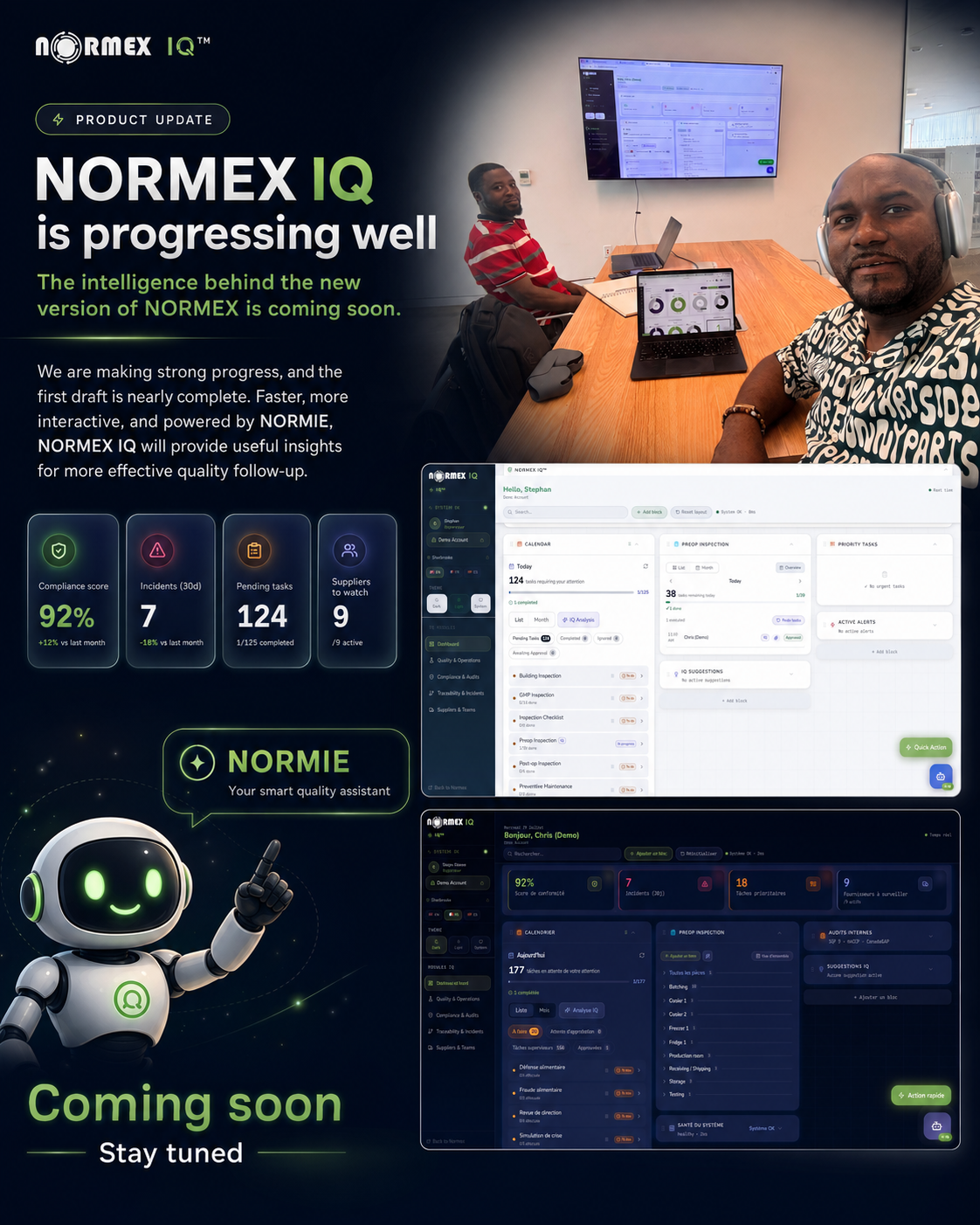
If you want to see how a modern food safety software approach can automatically track these KPIs—on-time controls, deviation trends, CAPA aging, and traceability speed—book a demo here:
Bring your current KPI list. The fastest way to improve is to compare what you measure today vs what actually predicts tomorrow’s risk.